LLC for Consultants: Pros, Cons, and Steps to Form in 2026


By Lisa Matthews, General Manager and Business Compliance Advisor at Next Step Filings. form your LLC and get a registered agent free.
If you are a consultant LLC or considering forming a limited liability company for consulting, you are likely wondering whether this business structure actually makes sense for your practice. Consulting work is fundamentally different from selling products, and the legal and tax implications of how you structure your business can affect everything from your personal liability to your tax bill. This guide walks through the practical pros and cons of forming an LLC for consultants so you can decide if it is the right fit for your independent consulting business.
An LLC for consulting is a limited liability company formed specifically to provide professional consulting services. It separates your personal assets from your business liabilities, meaning if a client sues you for breach of contract or errors in your work, your house, car, and personal savings are generally protected. Additionally, LLCs offer pass-through taxation by default, so your consulting income is taxed at your personal rate rather than a corporate rate.
Many consultants start as sole proprietors without even thinking about it. You do the work, you get paid, and the IRS considers you a sole proprietor. The problem is there is no legal separation between you the individual and you the business. If something goes wrong, a dissatisfied client can sue you personally, potentially reaching your personal assets.
Here is how forming an LLC changes that:
Next Step Filings is a private business filing service and does not provide tax advice. For tax matters, consult a licensed tax professional.
Before forming a consulting LLC, here are the regulatory and tax implications to consider:
Professional licensing: Certain types of consulting, such as healthcare, legal, or accounting consulting, may require state-level professional licenses. An LLC does not replace the need for proper licensing in regulated fields.
Self-employment taxes: Single-member LLC members pay self-employment tax of 15.3 percent on their net consulting income. This includes both the employer and employee portions of Social Security and Medicare taxes. If your consulting practice generates substantial income, consider speaking with a tax professional about S Corp election.
Annual compliance costs: LLCs require annual or biennial filings in most states, which come with state filing fees. Budget for these recurring costs when planning your consulting practice.
State-specific regulations: Some states, including California, impose minimum annual franchise taxes on LLCs regardless of income. Research your state's specific requirements before forming.
Next Step Filings is a document filing service and cannot provide legal guidance on which business structure is right for your specific situation.
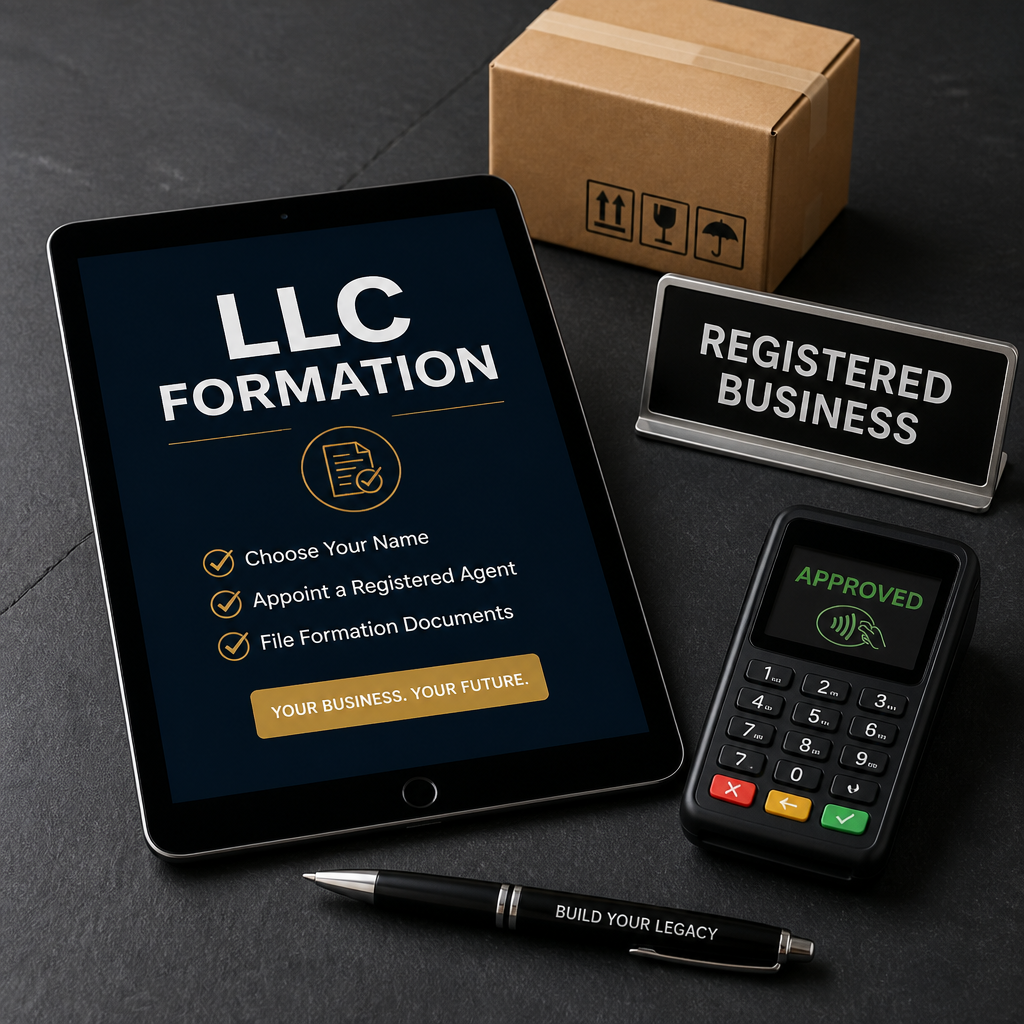
Here are the practical steps to forming your consulting LLC:
Formation timing varies by state. Some states offer expedited processing for an additional fee, while others have standard processing times of one to four weeks.
Next Step Filings does not offer expedited processing. All filings are manually verified against state records before submission.
Here is how an LLC compares to other common business structures for consultants:
LLC vs Sole Proprietorship: A sole proprietorship is the default when you start consulting without forming a business entity. It requires no formation paperwork, but offers zero liability protection. Any business lawsuit puts your personal assets at risk. See our full LLC vs sole proprietorship comparison.
LLC vs S Corporation: An S Corp is a tax election, not a business structure. Single-member LLCs can elect S Corp taxation once their consulting income reaches a level where the payroll tax savings exceed the costs of running payroll. Learn more about LLC vs S Corp tax treatment.
LLC vs PLLC: In some states, licensed professionals such as architects, attorneys, or healthcare consultants must form a Professional LLC instead of a standard LLC. Check your state's professional licensing board for requirements specific to your consulting field.
Other consultant resources: If you are consulting alongside freelance work, see our guide on forming an LLC for freelancers.
Next Step Filings does not provide tax advice on entity selection, including S Corp elections. Consult a CPA or tax professional.
Frequently Asked Questions for Consultants
Do I need an LLC to call myself a consultant?
No. There is no legal requirement to form an LLC before providing consulting services. However, without an LLC or other business entity, you operate as a sole proprietor, which offers no personal liability protection.
How much does a consulting LLC cost to form?
Formation costs include state filing fees ranging from about $50 to $500 depending on your state, registered agent service, and optional operating agreement drafting. Next Step Filings offers LLC formation with $0 base fee plus state fees, with a free year of registered agent service included.
Can I form an LLC if I consult in multiple states?
Yes, but you may need to foreign qualify your LLC in states where you have a significant physical presence or where your LLC is doing business. Requirements vary by state.
Is an LLC better than an S Corp for consultants?
For most new consultants, starting as an LLC taxed as a sole proprietorship makes practical sense. As your consulting income grows, you can elect S Corp taxation later without changing your business structure. There is no need to make this decision on day one.
Do I need an operating agreement for a single-member consulting LLC?
While most states do not legally require an operating agreement for single-member LLCs, having one is strongly recommended. It helps maintain the separation between you and your business, which is essential for preserving your liability protection.
Do consulting LLCs have ongoing compliance requirements?
Yes. Most states require annual or biennial reports with associated filing fees. Next Step Filings provides compliance management and annual renewal services to help consultants maintain good standing with their state.
Disclaimer: This informational guide provides general information about forming an LLC for consulting. Next Step Filings provides business filing services and is not a law firm, accounting firm, or tax advisor. Nothing in this guide constitutes legal or tax advice. For specific guidance on your consulting business, consult a qualified attorney or tax professional.
Lisa Matthews is the General Manager and Business Compliance Advisor at Next Step Filings, where she helps small business owners navigate filing and compliance requirements.
Subscribe to the NextStepFillings Updates